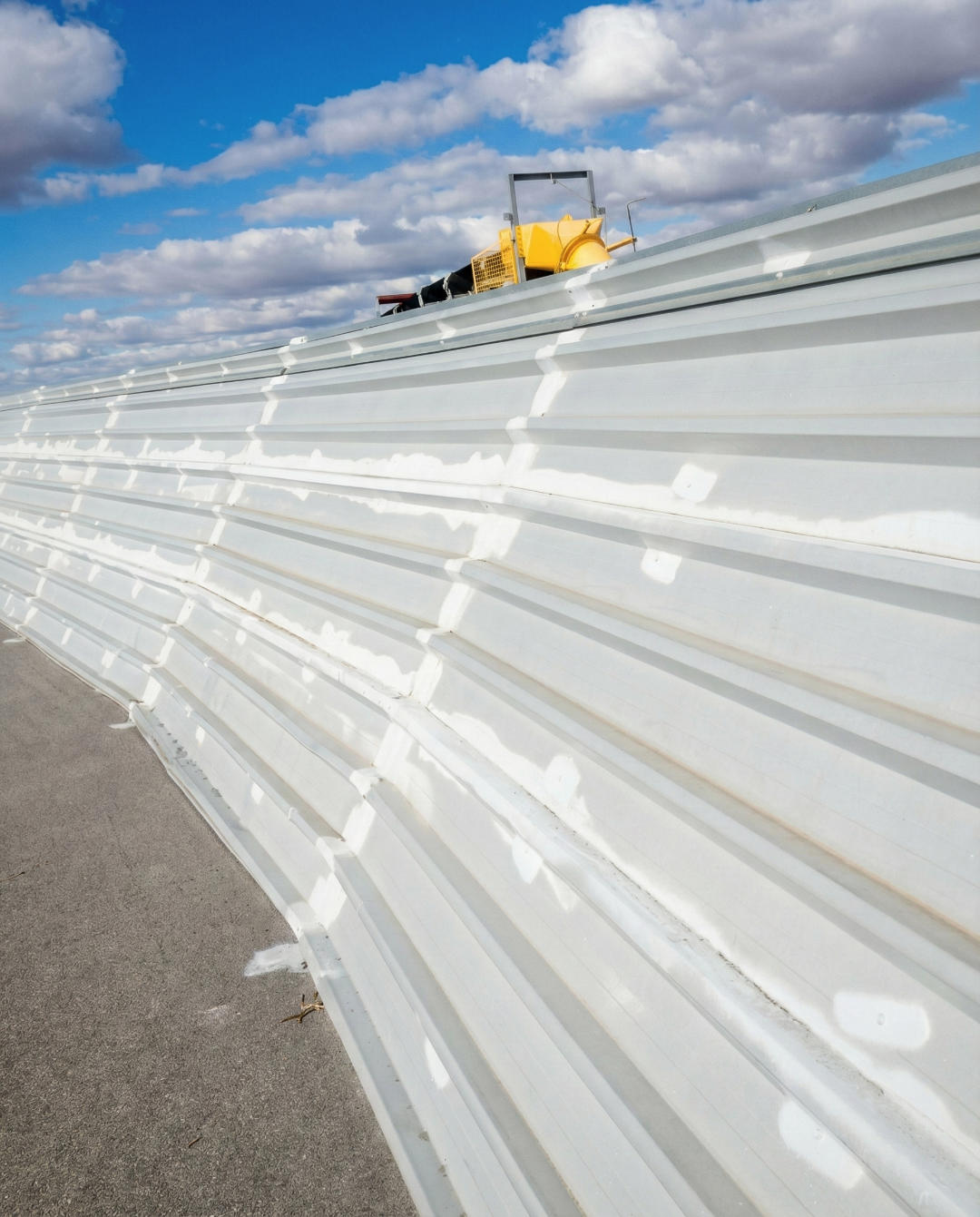
Temporary Storages
Fumigating unsealed bunkers does not kill pests at all life stages, and repeat fumigations increase resistance and select for higher phosphine tolerance, effective control requires phosphine concentrations of 300 ppm for seven days or 200 ppm for ten days, levels that trials show are impossible to maintain in unsealed bunkers, so surviving eggs and pupae will continue to develop and reinfest the grain.
APPLICATIONS TO TEMPORARY STORAGES (METAL & CONCRETE WALL)
- 01
 All the metal wall horizontal and vertical joints, tek screws and any patch repairs are sealed with Glo-Mastic or Glo-Interseal membrane. Any large gaps are stitched together using a wafer head stitching screw.
 - 02
 All Concrete bunker wall vertical joints are sealed using Global Flexible Filler or Glo-Mastic.
Applications for structure sealing
Our expert team uses advanced techniques and quality materials to meet AS 2628 standards, ensuring your grain is protected, fumigation is effective, and your storage assets last longer. Here are some examples of how we achieve it.
-
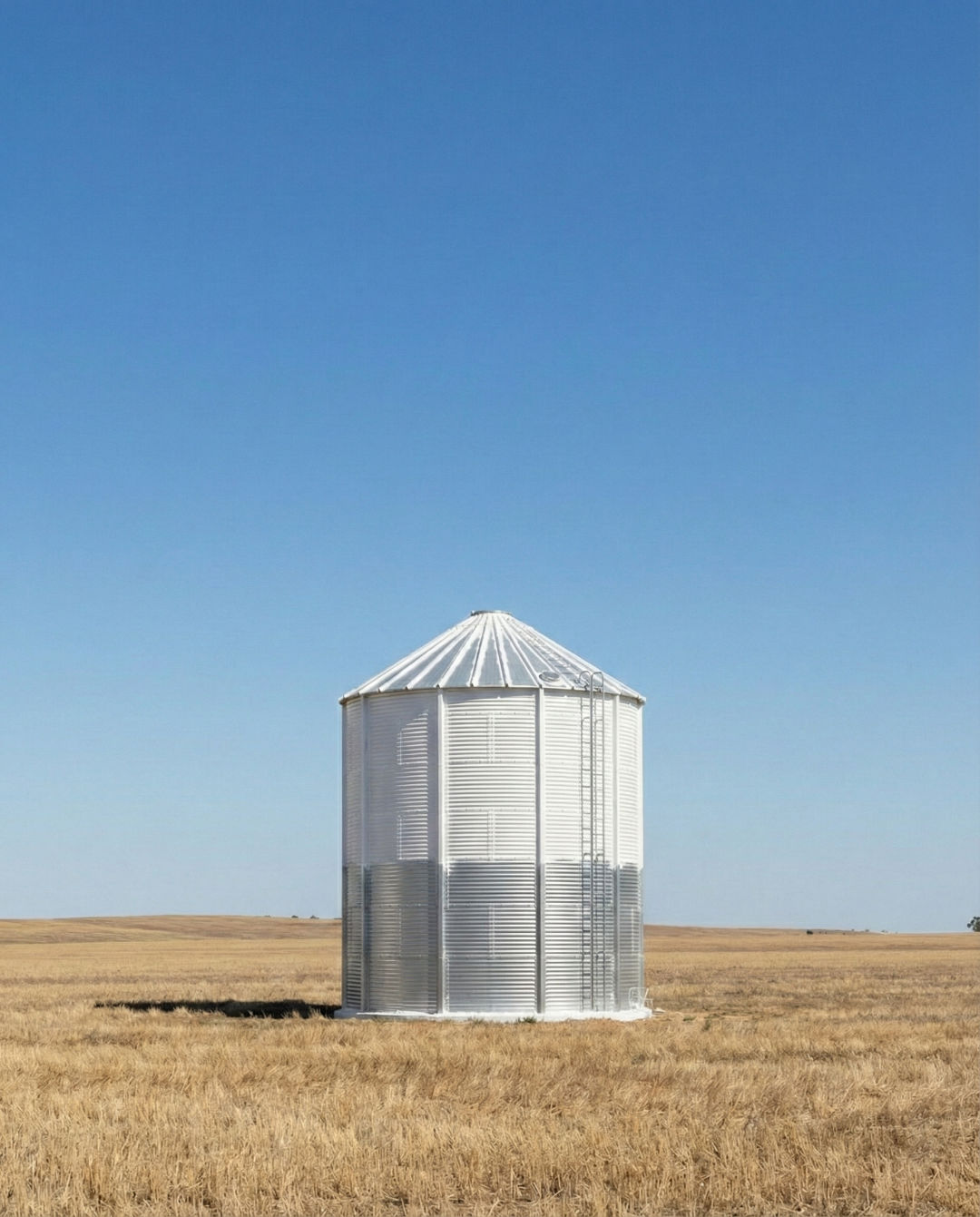
Small Silos
Small on‑farm silos are increasingly used to store grain before sale or livestock use, but effective phosphine fumigation requires gas‑tight, pressure‑tested sealing to Australian Standard AS2628, a five‑minute half‑life. In unsealed silos, target concentrations of 300 ppm for seven days or 200 ppm for ten days cannot be maintained, so pests survive at some life stages and resistance increases, and many silos sold as “sealed” are not truly gas‑tight, making them unsuitable for fumigation.
-
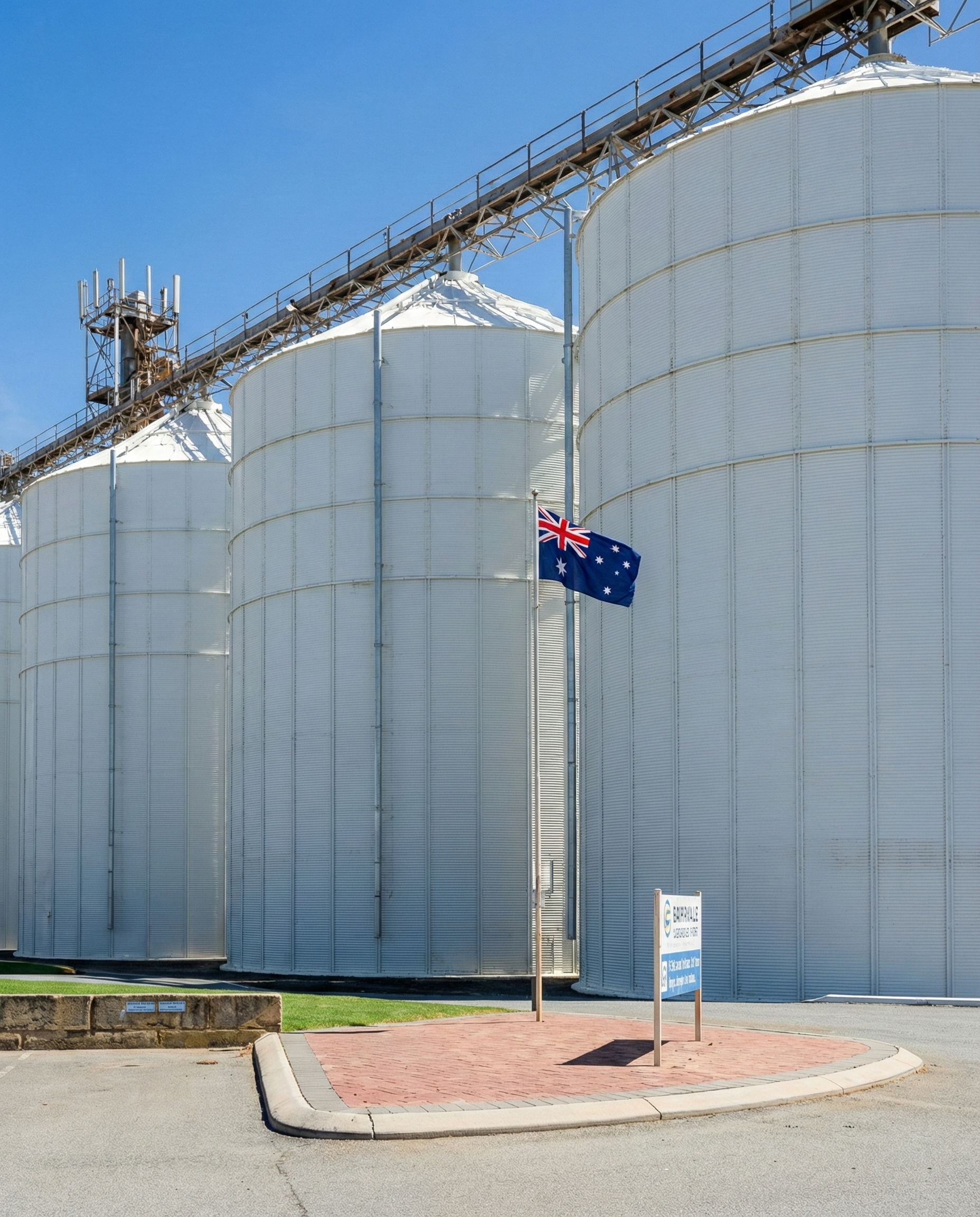
Medium Silos
Medium-capacity on‑farm silos are increasingly used to store grain before sale or livestock use, but effective fumigation with phosphine requires silos to be genuinely gas‑tight and pressure‑tested to Australian Standard AS2628 (five‑minute half‑life). In unsealed silos, required concentrations of 300 ppm for seven days or 200 ppm for ten days cannot be maintained, so pests survive at some life stages and resistance increases; many silos marketed as “sealed” are not gas‑tight and are unsuitable for fumigation.
-
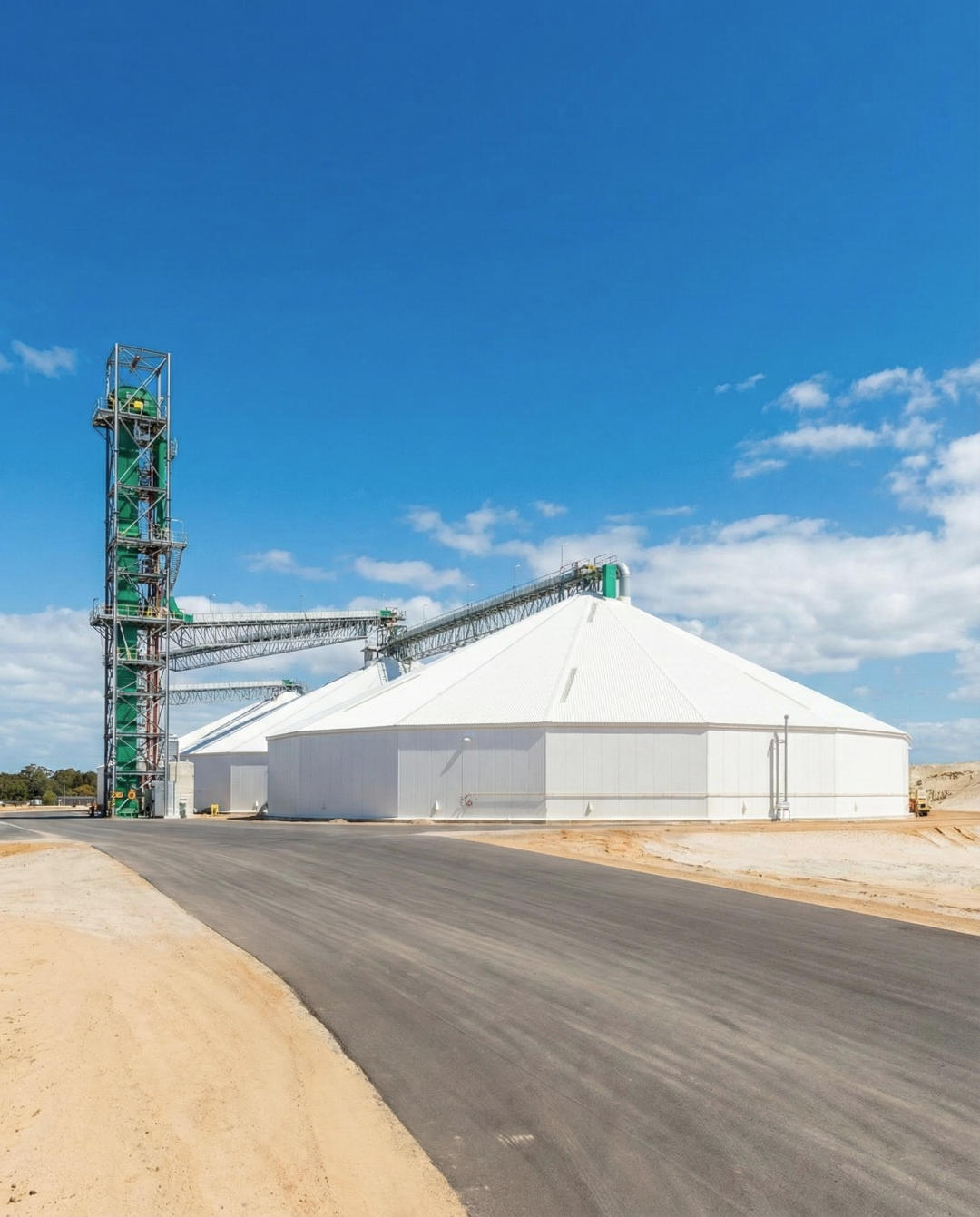
Large Silos
Sealing for large grain storages of 10,000 tonnes or more falls outside Australian Standard AS2628 used for general farm silos. These 20,000‑tonne storages are sealed and tested to ensure internal pressure decay does not exceed half of an induced pressure, 200 Pascals, over 10 minutes when empty, and only when internal pressure is at or below ambient external pressure.
-
Tarpauling Sealing
Tarpaulin sealing ensures water‑tight and gas‑tight coverage for temporary grain bunkers, critical for effective fumigation and preventing insect resistance. PPE and PE tarpaulins have low surface adhesion, so <a href='/products'>Global TarpSeal RB</a>, a solvent free acrylic rubber filled lightweight membrane with high adhesion and optional fiber reinforcement, is used for reliable sealing, while PVC offers broader product compatibility including <a href='/products'>Glo-Mastic</a>, a solvent free acrylic membrane that can also be fiber reinforced. Achieving and maintaining phosphine concentrations at 300 ppm for seven days or 200 ppm for ten days requires properly sealed seams, since unsealed bunkers cannot sustain these levels and will not kill pests at all life stages.

-
Warehouse Roof Sealing
Global’s seamless membranes waterproof warehouse and factory roofs via airless spray for a continuous water‑tight finish. <a href='/products'>Novalast 151 LTM</a>, a solvent‑free acrylic membrane with 350% elongation at 2mm, provides durable sealing on metal, masonry, fibro, and concrete, reducing internal temperatures by up to 40%. Proven on a 52,000 m² roof in Canning Vale, Western Australia.

Ready to start your project?
If you have a project you would like to get quoted on, the process is really simple. Just fill out the quoting form on this site with the needed structures and measurements and let us do the rest.
Request a Quote